
Repetitive tasks waste team time
Document handling, routing, summaries, and repeated responses are all places where automation can reduce drag.
We help businesses integrate practical AI into software, workflows, and customer experiences without turning the project into a science experiment.

The right use case can save time, unlock knowledge, and improve service. The wrong one adds noise. We focus on practical implementation tied to business value.
Document handling, routing, summaries, and repeated responses are all places where automation can reduce drag.
When important information lives across docs, email threads, and systems, retrieval becomes slower than it should be.
AI-enabled workflows can help teams handle more requests with more consistency and better context.
We help narrow the project to what is useful, supportable, and realistic to maintain.
We work best when AI is part of a real workflow, not just a novelty feature bolted onto the product.
Each engagement is shaped around the business context, but the path always starts with clarity and ends with a usable launch.
We start by identifying the highest-value process or interaction to improve instead of chasing AI for its own sake.
Inputs, outputs, human review points, and integration needs are mapped so the feature behaves like part of the business.
We connect the models, build the interface, and add the controls needed for quality, trust, and reliability.
AI features get better when performance is monitored and adjusted based on real-world usage and edge cases.
A few recent projects from the broader portfolio that show the level of polish, structure, and implementation thinking behind the work.

Video / Wordpress / JavaScript / PHP / SASS
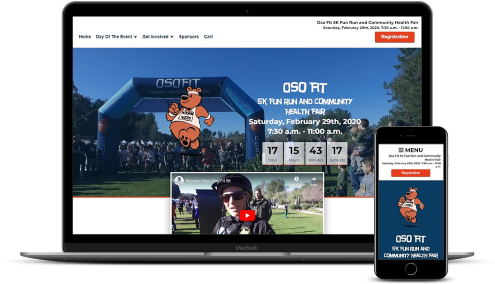
Video / Wordpress / JavaScript / PHP / SASS

Video / Wordpress / JavaScript / PHP / SASS
Both, depending on the problem. In many cases the right solution is thoughtful integration with existing models plus the workflow, UX, and guardrails around them.
Yes. AI often becomes most useful when it is connected to current systems, data, or internal documentation rather than isolated from them.
We plan for review points, clear output boundaries, and better context so the implementation is usable and responsible in day-to-day operations.
Usually no. AI is often most valuable as a capability inside custom software or a workflow, not as a full replacement for the underlying system.